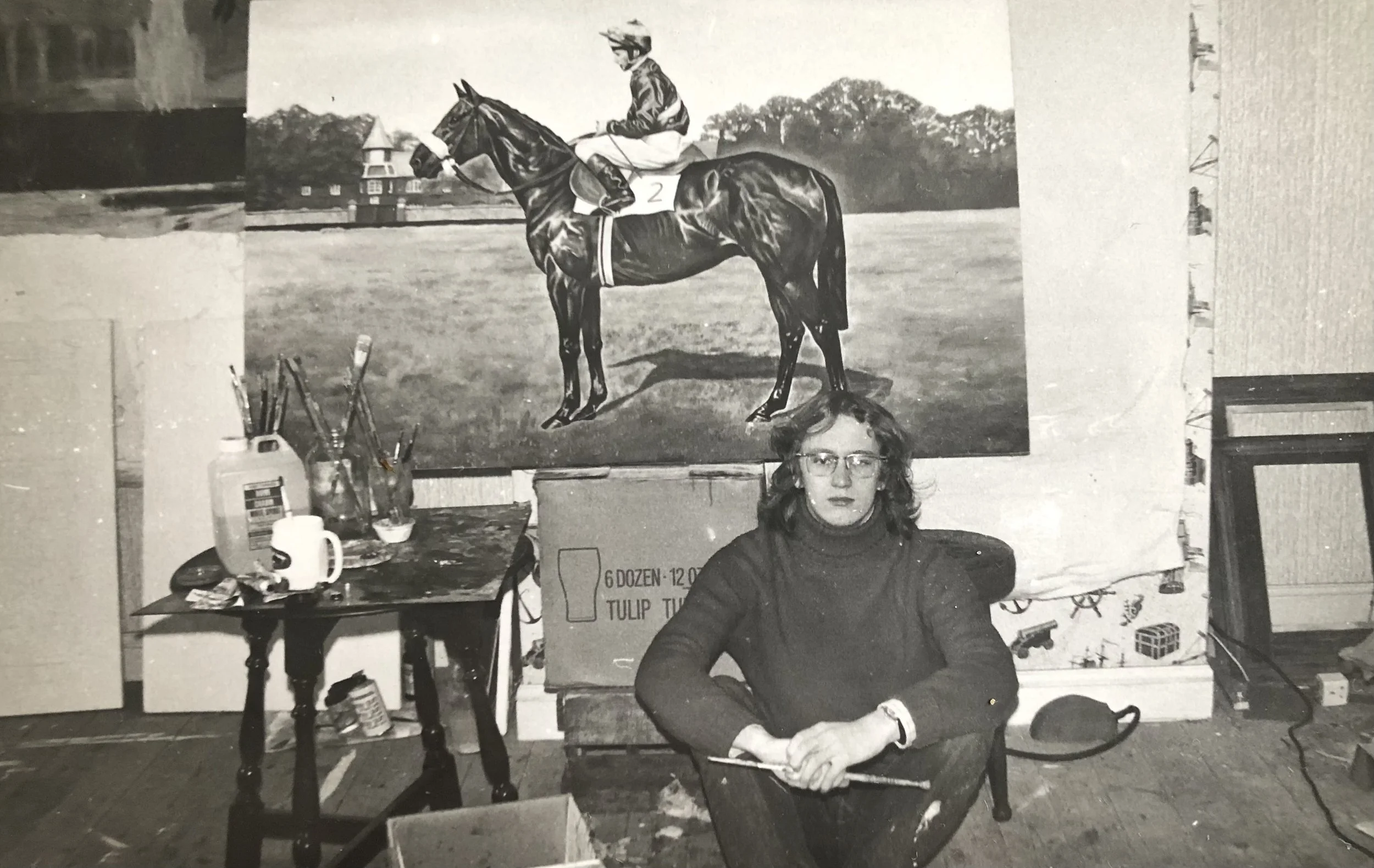
Stuart Hirst
Stuart was born in Bradford in 1950. From an early age he had an ability to draw and paint and subsequently never strayed from ‘art’ as his vocation. After sixth form he took a one-year foundation course at Bradford College of Art, following which he studied Fine Art at Exeter Art College, gaining his degree in 1972.
After college he worked in his parents' business in Bradford and painted in his spare time. Many of his early works were large oil paintings of regulars playing dominoes or having a quiet pint in his family pub.
His first major exhibition was in 1977 where he showed at Bradford Central Library. Here he came to the notice of the Telegraph & Argus art critic, John Hewitt, who was greatly impressed by Stuart’s work. In1979, he won the Yorkshire Television Fine Art Fellowship Award which resulted in a number of one man shows across the North of England. According to Hewitt, he had never seen as many people at an exhibition at Cartwright Hall as when Stuart’s one-man show was displayed.
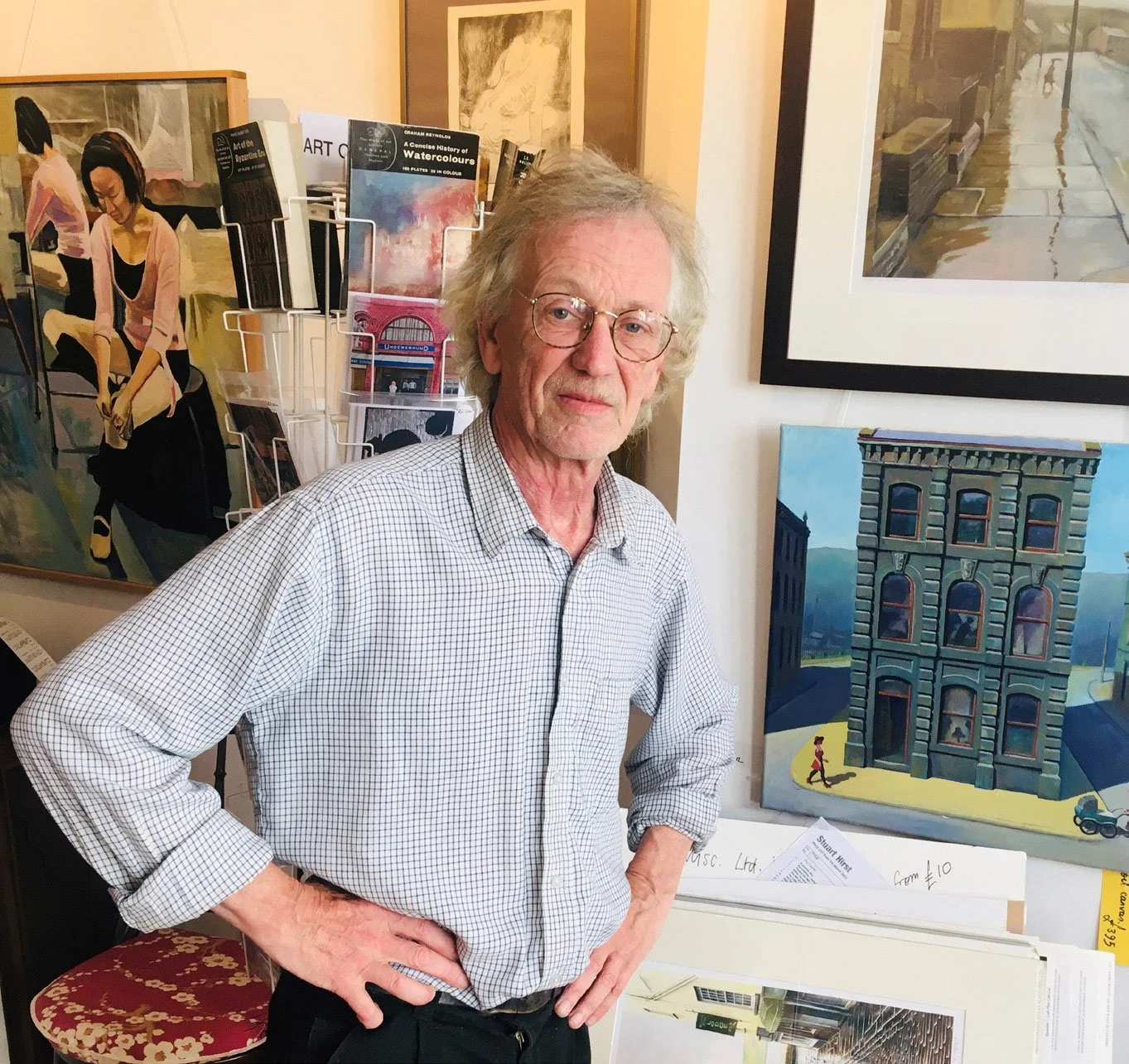
in the early 80s Stuart gradually moved away from huge oils on canvas and began to develop his trademark style: The Wet Street Scenes. These magnificently captured the shimmer of rain on cobbles and flagstones. Over the years he has painted hundreds of Yorkshire back streets and now changes in the urban landscape has meant that many of these places have been demolished are now lost forever, making the pictures extremely collectable.
in the early 90s, Stuart embarked in a style he created whilst in Exeter. A style referred to as ‘Fantasy Street Scenes’. Although many are based on real places, they have surreal quality with inspiration coming from memory, dreams and the influence of artists such as Edward Hopper, and Lowry.
“I like to look up at buildings above the ground or first floor trying to imagine the story that goes on behind shuttered windows and lace curtains. I try to capture those moments in life; a lonely face at a window, a single light bulb hanging down unshaded, the flicker of a TV set. Everything around us is so interesting… You just have to look a bit more closely”. He continues, “in these works I have gone from the realism of the wet Streets to something more fluid and deeper, with a touch of humour and pathos”.
In these Paintings the viewer sees a colourful world filled with strange figures with enough detail to give each an identity. Stuart's paintings take us on a voyeuristic journey through a seedy world of bedsit land, of lonely people, of streets filled with activity, through to the derelict back streets of a time that looks in the past but is just as relevant today.